
Review
DJI Power 1000 review: the spec sheet said two hours, I got thirteen
What it actually runs and for how long, including a pitching machine that lasted 13 hours instead of the two the spec sheet predicted.

Some links here are affiliate links. If you buy through one, I get a small cut at no extra cost to you. It's what pays for the gear I test, and it never changes what I say about it. How this works.
The short version
DJI Power 1000 (1024Wh, 2200W)
- Price
- $599.99
- Best for
- Anyone who can't run a generator and still needs real power
What's good
- Runs far longer than the nameplate math suggests. Thirteen hours on the pitching machine.
- 2200W output runs things a 300W unit simply refuses, including anything with a heating element.
- Full recharge in about 70 minutes.
- Keeps finding jobs I didn't buy it for.
What isn't
- It's heavy. About 29 pounds, and you feel every one of them walking from the lot to the field.
- No solar panel in the box. The 800W input is there, the panels cost extra.
Check current priceaffiliate link
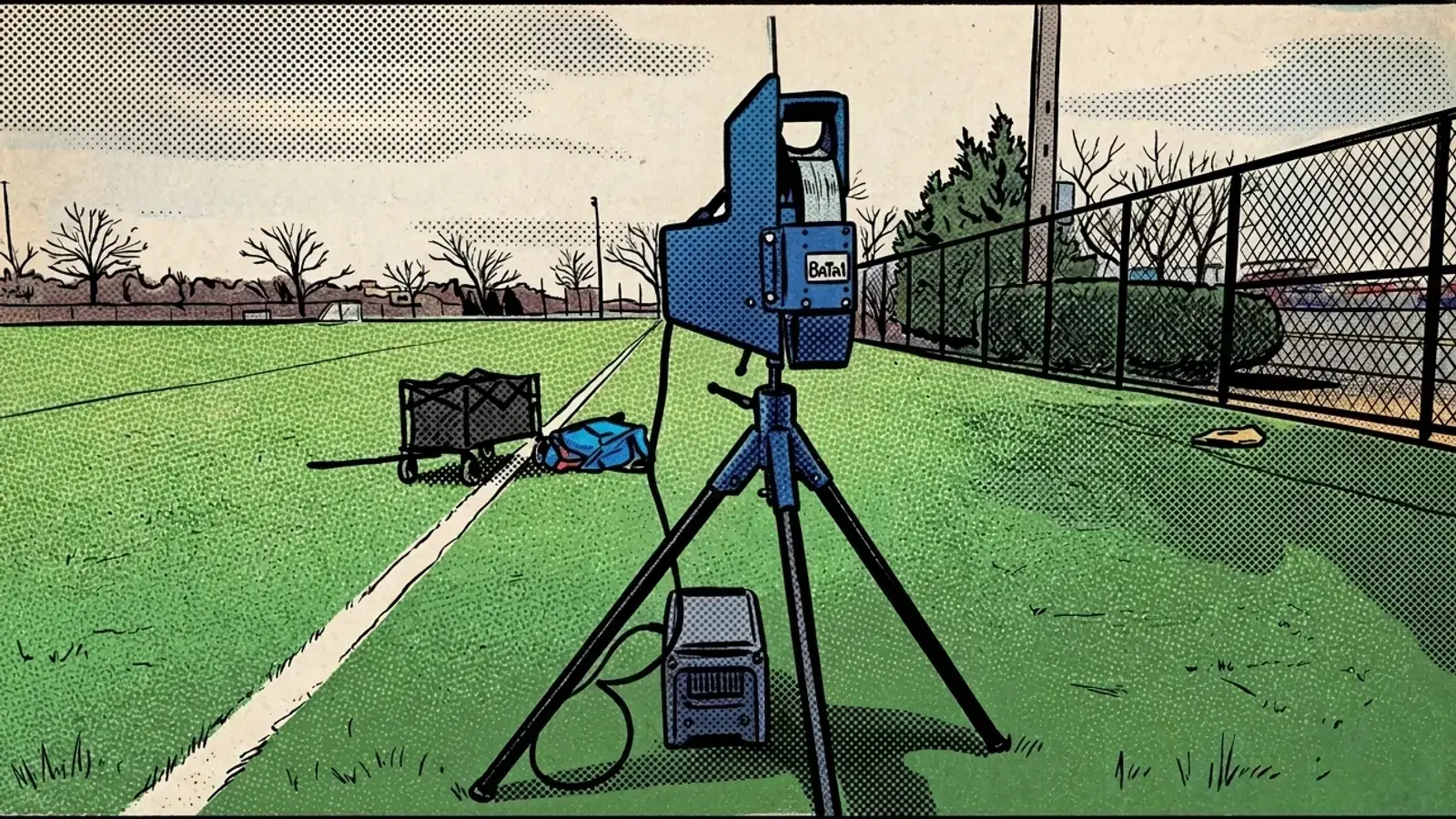
BATA publishes a number for the BATA-1 pitching machine: 400 watts per motor, minimum, if you’re sizing a generator. Run that against a 1024Wh battery and you get about two hours. That was the number I expected when I first plugged the machine into the DJI at the field.
The DJI shows you live draw and time remaining on its front display. With the machine spinning, it reads thirteen hours.
Why the spec sheet is off by eleven hours
Getting the wheel up to speed is what costs you. Once it’s spinning, a pitching machine is a motor turning a flywheel against almost nothing. It only sees real load for the split second a ball passes through, and then it’s back to coasting.
That 400W figure is a full-load rating. It’s the right number for sizing a generator, because a generator has to survive the worst instant. It’s the wrong number for estimating how long a battery lasts, because a battery cares about the average, and the average here is somewhere around 70W.
This is the whole argument for buying on measured use instead of nameplate ratings, and it’s why I’d rather tell you what a display said in a field than what a PDF says.
What it actually runs
One honest distinction before the tables: the pitching machine number is measured, the rest are calculated. I’ve watched the DJI’s own readout with the BATA-1 running. The others come from published draw figures against roughly 870Wh of usable capacity, which is what 1024Wh comes out to once you account for inverter losses.
The three things I bought it for
| What | Draw | Runtime |
|---|---|---|
| BATA-1 pitching machine | ~70W once spinning | 13 hours, measured |
| Traeger Ranger | 400W for 5 min, then 50W | ~17 hours |
| Apartment fridge | ~35W average, cycling | ~25 hours |
A twelve-hour brisket fits inside one charge with room left over. That’s the number that surprised me most, because a pellet grill feels like it should be power hungry, and after the igniter finishes it just isn’t.
In an outage
| What | Draw | Runtime |
|---|---|---|
| Apartment fridge | ~35W average | ~25 hours |
| Wifi router and modem | ~20W | ~43 hours |
| CPAP, no humidifier | ~35W | ~25 hours |
| Box fan | ~50W | ~17 hours |
| LED lamp | ~10W | ~87 hours |
| Laptop | ~60W | ~14 hours |
| Phone, full charges | ~15Wh each | ~55 charges |
| Microwave | ~1000W | ~50 minutes |
| Coffee maker | ~900W | ~1 hour |
| Space heater | 1500W | ~35 minutes |
Look at the bottom three. A 300W power station won’t run any of them, at any state of charge, ever. It doesn’t matter how full the battery is. The DJI’s 2200W output means the answer is “yes, for a while” instead of “no,” and in an outage that’s the difference between a hot meal and a cold one.
The fridge, twice
We’ve lost power twice since I bought it. Both times the fridge went on the DJI and stayed there until the lights came back, which was around ten hours each time.
I never got close to the limit. An apartment-size fridge is a smaller load than people expect, because it isn’t running continuously, it’s cycling on and off. The trick that actually matters during an outage is keeping the door shut, not the size of your battery.
The job I didn’t buy it for
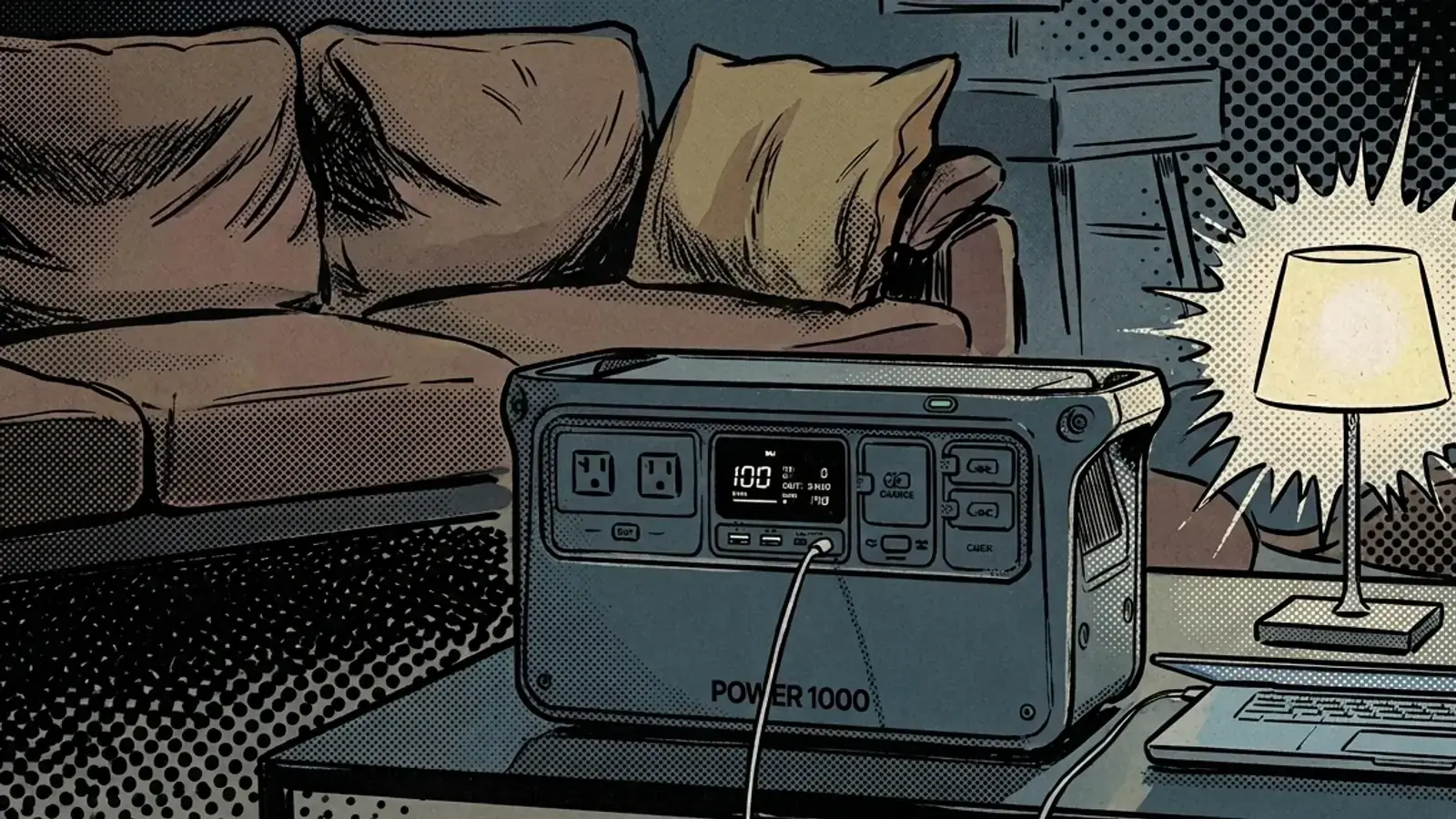
For a stretch I had no desk and no laptop, just a Mac mini. So I put the whole setup on a rolling computer cart and ran it off the DJI: mini, monitor, and printer, wheeled to whatever room I needed to work in.
That’s roughly 90W with the printer idling, which is about nine hours of actual work off one charge. It turned a power station into an extension cord that goes anywhere, and it’s the use I’d never have predicted when I bought it.
The grill
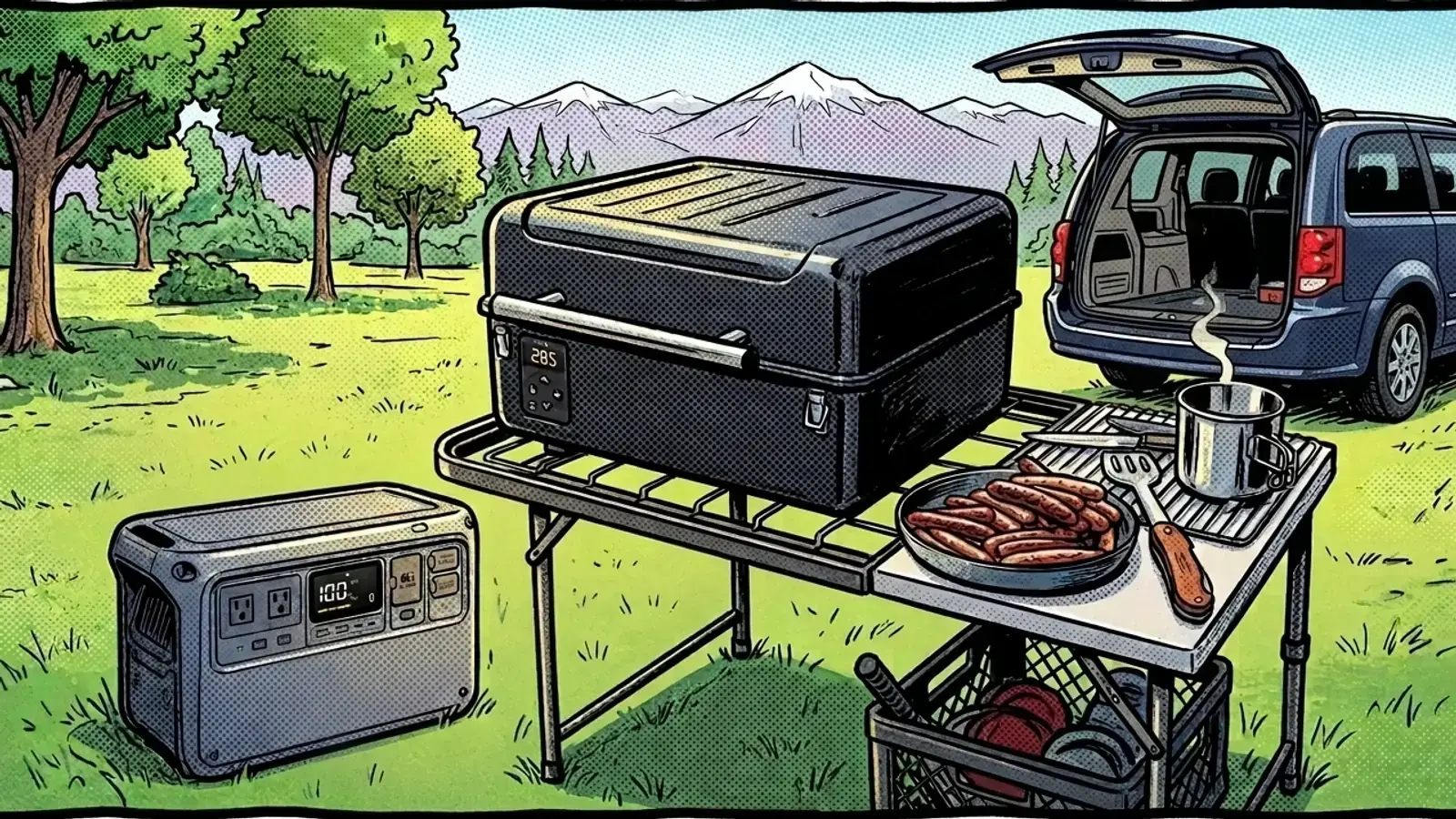
The Traeger Ranger is the only grill I own that needs an outlet, so at a park it needs this. Startup pulls around 400W for the first few minutes while the igniter works, then it settles to about 50W to keep temperature.
Check your park’s rules before you plan a cook around it. Some places that allow the grill still prohibit portable power stations, which is a rule I didn’t know existed until I went looking.
The specs that matter
- 1024Wh capacity, LiFePO4 cells, rated to hold over 70% capacity after 4000 cycles. That’s a decade of weekly use.
- 2200W continuous, 2600W max, 4400W peak. The headline number.
- Full recharge in about 70 minutes from the wall. This changes how you use it: you stop keeping it topped up and start filling it when you see weather coming.
- 800W solar input if you buy panels, which are extra.
- 0.2 second UPS switchover, so it can sit between the wall and something that shouldn’t lose power.
- 13 kg (28.7 lb), 448 × 225 × 230 mm, about 17.6 × 8.9 × 9 inches.
- Quiet. The fan is rated at 23 dB and I’ve never noticed it indoors.
Why DJI
Honestly? I already run their drones and their action cameras, the price was competitive with the names you’d expect, and I liked how it looked. That’s a less rigorous reason than “I compared discharge curves,” but it’s the real one, and the ecosystem argument turned out to be real too if you own DJI batteries.
What bugs me
It’s heavy. Twenty-nine pounds, and you notice it on the walk from the parking lot to the field, especially when you’re also carrying a pitching machine and a bucket of balls. Every LiFePO4 unit in this capacity class weighs about the same, so this is the category’s fault more than DJI’s, but pick one up before you assume you’ll be carrying it far.
Who should skip it
- If you only need to charge phones and a laptop, this is far more battery than you need. Buy something half the size and lighter.
- If you want to run a whole house, this isn’t that either. It’s a one-or-two-appliances-at-a-time tool, and the honest framing is that it buys you the important things for about a day, not everything for a week.
- If it’ll live in a car and never come out, the weight stops mattering and this is an easy yes.
For a family that can’t have a generator, cooks away from outlets, and loses power occasionally, it’s the piece of gear I’d replace first if it disappeared.